Gen Alpha, Gen Z & Social Media: How To Adapt Your Strategy Now

Gen Alpha, Gen Z & Social Media: How To Adapt Your Strategy Now
New generations aren’t just using social platforms differently, they’re quietly rewriting the rules for how brands should show up online.
If you manage social for a brand, you’re already feeling it: shorter attention spans, stricter filters for inauthentic content, and a constant shift toward new formats. Gen Z led that shift. Gen Alpha is growing up inside it.
This article breaks down how Gen Z and Gen Alpha interact with social media, and what that means for your content, scheduling, automation, and analytics. You’ll also see where an AI-driven tool like SocialDesk can take work off your plate while helping you keep pace.
1. How Gen Z and Gen Alpha Actually Use Social Media
Let’s start with behavior, not stereotypes.
Gen Z (born ~1997–2012)
Gen Z is already buying, influencing, and often running their own side hustles online. Key habits:
- Search on social first: They often treat TikTok, Instagram, and YouTube as search engines.
- Short-form first, long-form when interested: They’ll watch 6 seconds, then decide if you’ve earned 60.
- High BS detection: Over-edited, overly branded content gets skipped fast.
- Multi-platform journeys: They might discover you on TikTok, stalk you on Instagram, then convert from a link on X or LinkedIn.
Gen Alpha (born ~2013–)
Still young, but patterns are visible:
- Video is the default language: They grow up thinking in clips, not text.
- Hybrid creators: They swap between consuming and creating in the same session.
- Ultra-low tolerance for friction: Slow load times, confusing UX, or ugly grids lose them immediately.
For you, this means:
- Assume video and carousels are central, not “nice-to-have”.
- Plan multi-platform funnels rather than single-post wins.
- Treat authenticity and speed as core performance metrics.
2. Content Types They Actually Pay Attention To
Gen Z and Gen Alpha don’t care about your content calendar. They care about whether your post earns their next second.
Formats that work
-
Short-form vertical video (TikTok, Reels, Shorts)
- 6–15 seconds to hook.
- Clear payoff: a quick tip, a transformation, or a punchline.
-
Snackable carousels
- Swipable breakdowns: “3 mistakes to avoid…”, “Step-by-step…”.
- Strong cover slide, simple typography, one idea per slide.
-
Conversation-driven posts
- Polls, Q&A, duets, stitches, comments-as-content.
- Not just talking at them but talking with them.
-
Behind-the-scenes & "real" moments
- Unpolished clips from your process or your team.
- Screenshots, notes, drafts, quick Loom-style recordings.
3. Posting Times, Frequency, and the Reality of Burnout
Gen Z and Gen Alpha are online in micro-moments: between classes, during commutes, late at night. They aren’t reading your brand update at 9:00 AM just because you feel organized.
What they expect
- Timely responses: If they DM or comment, they expect replies within hours, not days.
- Consistent presence: Not 10 posts in one week and silence for the next three.
- Platform-fit timing: They’re active at different times per network.
Trying to hit all of this manually is how social media managers end up burned out.
Where AI scheduling changes the game
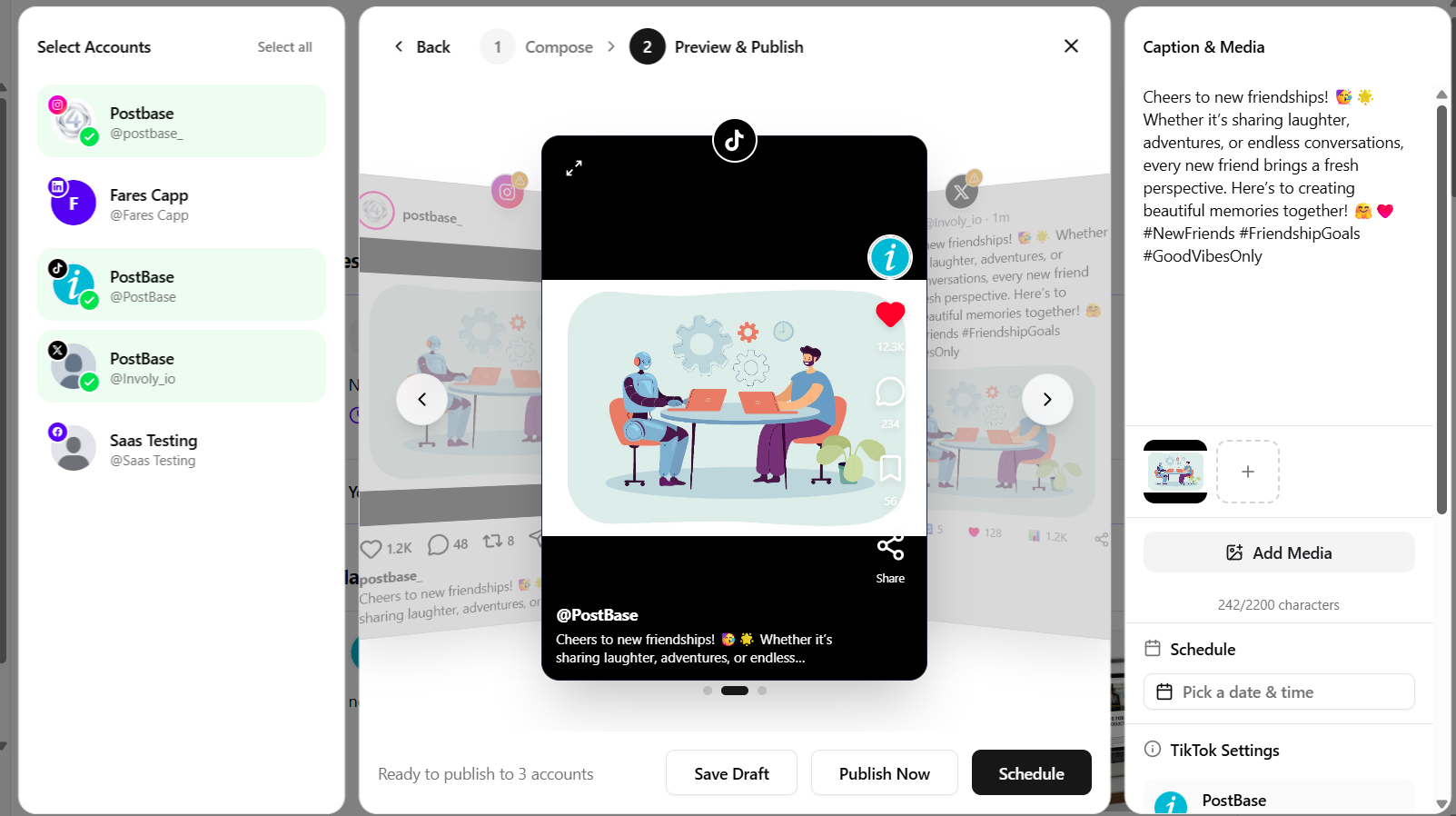
With SocialDesk’s AI-powered post creation, you can:
- Queue content for Instagram, TikTok, LinkedIn, X, Facebook, and YouTube from a single dashboard.
- Keep a consistent rhythm without blocking off half your week for manual scheduling.
A simple weekly workflow might look like:
- Batch 6–8 short clips + 2 carousels on SocialDesk
- Load everything into SocialDesk
- 15–20 minutes in unified inbox responding to comments/DMs
- Review analytics, adjust ideas for next week
This keeps you visible where young audiences hang out while protecting your time.
4. Conversation, Not Broadcast: Unified Inbox & Auto-Replies
Younger users treat DMs and comments as a two-way channel, not a suggestion box.
If you:
- Let DMs sit unanswered,
- Miss comment threads on viral TikToks,
- Or reply days later on one platform but not another,
it feels like your brand isn’t really there.
The case for a unified inbox
Rather than jumping between native apps, use SocialDesk’s unified inbox to:
- See all comments and DMs from Instagram, TikTok, Facebook, LinkedIn, and X in one feed.
- Prioritize by platform, sentiment, or campaign.
- Tag and assign conversations to teammates.
This is especially powerful when a post suddenly takes off with younger audiences. You stay responsive without chaos.
Smart auto-replies that still feel human
Auto-replies aren’t just for customer support. Used well, they help you:
- Acknowledge DMs instantly: “Hey, got your message, we’ll respond soon.”
- Share quick links: FAQs, product pages, or sign-up forms.
- Route questions to the right person.
Because SocialDesk’s AI auto-replies can be tailored to your tone, you avoid robotic answers, which younger generations quickly tune out.
5. Analytics: What To Track For Gen Z & Gen Alpha
If you still only look at follower count, you’ll miss the real picture of how younger audiences behave.
Metrics that matter more
Focus on:
- Saves & shares: Indicate real value, especially for carousels and short-form tips.
- Watch time and completion rate: For video, these matter more than views.
- Comments and DMs per post: Measure conversation, not just impressions.
- Cross-platform journeys: Traffic patterns from TikTok to Instagram to your site.
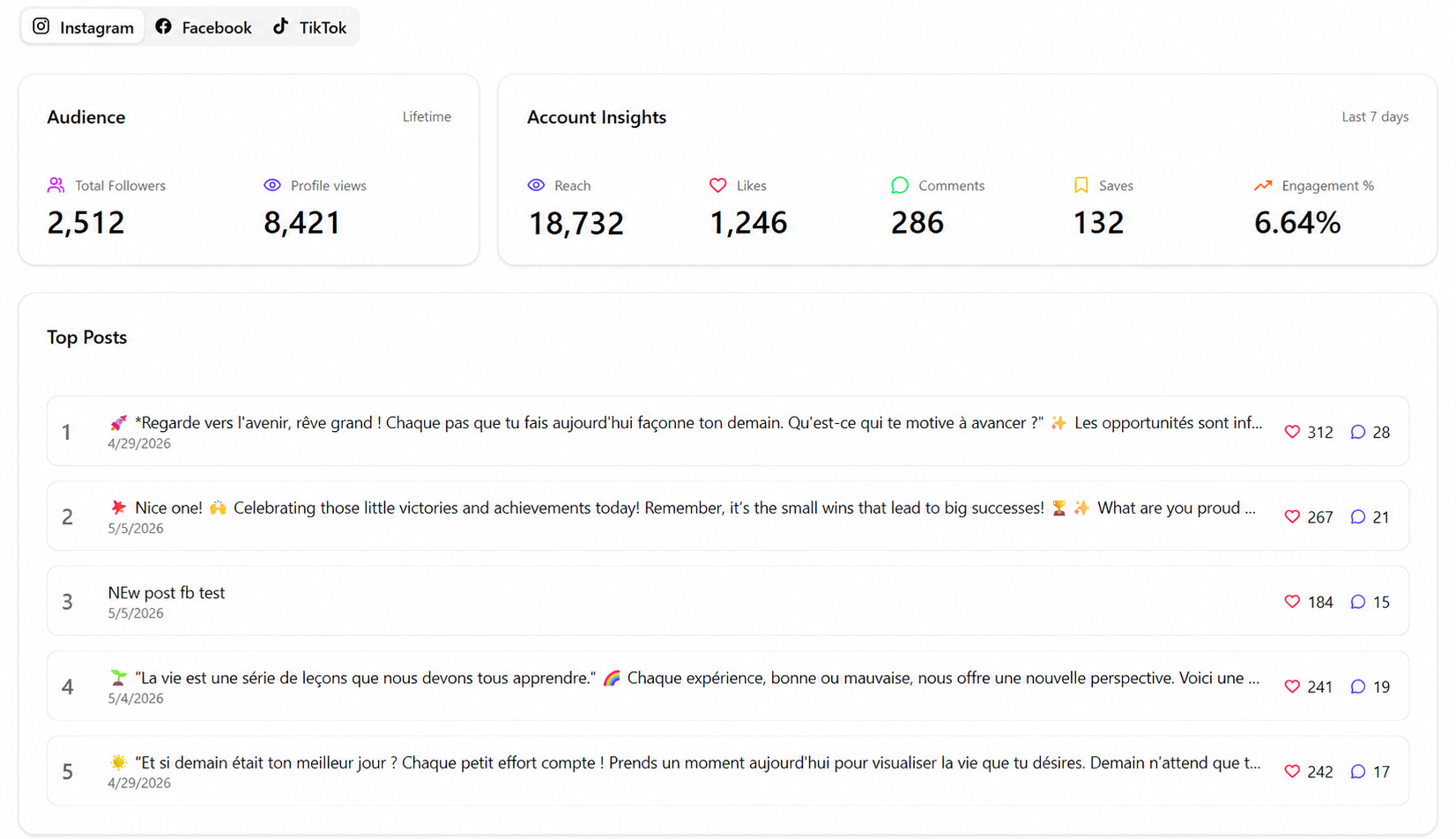
Inside SocialDesk’s analytics, build a simple monthly dashboard:
- Top 5 posts by watch time.
- Posts that drove the most DMs.
- Platform-level engagement rates.
Use analytics to refine content for new generations
Ask:
- Which hooks make Gen Z stop scrolling?
- Which topics Gen Alpha is saving for later?
- Which platforms generate actual conversions from younger users?
Then adjust:
- Double down on formats that drive saves and shares.
- Repurpose high-performing ideas into new formats (e.g., turn a popular LinkedIn text post into a TikTok script).
6. Practical Workflow: Running a Youth-Focused Strategy in SocialDesk
Let’s pull this together into a concrete, repeatable workflow.
Step 1: Weekly content mapping
Define 3–4 content pillars relevant to younger audiences, for example:
- Career and money advice for early professionals
- Product tips and use-cases for students
- Behind-the-scenes of building your brand
- Short explainer content answering their common questions
Sketch ideas like this:
Idea: "How we plan a TikTok launch in 30 minutes"
- TikTok: 15s behind-the-scenes clip
- IG: Carousel breakdown of the 4 steps
- LinkedIn: Formatted text post reflecting on results
- YouTube Shorts: Same clip as TikTok with tailored caption
Step 2: Convert ideas into platform-ready posts
- Use SocialDesk and its AI Posts Bulk Creation that generates posts from ideas.
- Pick the posts that are the most interesting
- You can make small edits
Step 3: Schedule and optimize
- Schedule posts created via SocialDesk.
- The posts will all appear on the calendar, filling your weekly/monthly content.
Step 4: Engage and refine
- Spend 15–30 minutes daily in your unified inbox responding and joining conversations.
- Use auto-replies to handle FAQs and after-hours messages.
- Review analytics weekly, and each month experiment with one new format or hook specifically for younger audiences.
If you manage multiple brands or clients, check out how SocialDesk compares with tools you might already know, like Buffer or Publer. The AI scheduling and unified inbox are especially helpful when you need to keep several youth-focused accounts organized.
7. Looking Ahead: Preparing for the Next Wave
Gen Z normalized creators as trusted sources. Gen Alpha is growing up expecting brands to behave more like creators: fast, responsive, visual, and honest.
You don’t need to rebuild your strategy from scratch for every new generation. You need:
- A content system that favors short-form video, carousels, and conversation.
- A scheduling and inbox hub like SocialDesk so you stay present without working 24/7.
- A habit of reading analytics through the lens of actual behavior, not vanity metrics.
If your workflow supports these, you’ll be ready not just for Gen Z and Gen Alpha, but for whatever comes next.